CASE FILE · PRODUCT 001 · 2025 — PRESENT
Maneuver: Strategy that works offline.
An open-source FRC scouting and strategy platform designed and engineered for the real conditions of robotics competition.
The challenge
How do you design a data-intensive strategy platform for people using phones, tablets, and laptops inside crowded robotics competitions where connectivity cannot be trusted?
Designing for competition
Maneuver serves two very different modes of attention: scouts recording rapid observations in the stands and analysts making consequential decisions from dense information. The interface has to support both without assuming a quiet room, a large screen, or a reliable network.
Scouts need speed
Large touch targets, short paths, and game-specific inputs help people record a match quickly in a loud, time-constrained environment.
Strategists need context
Analytics must reveal patterns without hiding the underlying match data that lets a team trust and act on the result.
Teams bring what they have
The same workflows have to remain clear across phones in the stands, tablets in the pit, and laptops at the strategy table.
From UX constraints to architecture
The technical architecture followed from the experience the product needed to guarantee. Each constraint became a system decision.
Every core workflow remains available when venue connectivity disappears.
Teams can start scouting without deploying or maintaining infrastructure.
Data moves between devices through resilient, flexible transfer paths.
Annual game rules can change without rebuilding the product from scratch.
Strategy, not just data collection
The product follows the decision-making journey from observation to action. Each workflow exists because the next one depends on it.
- 01
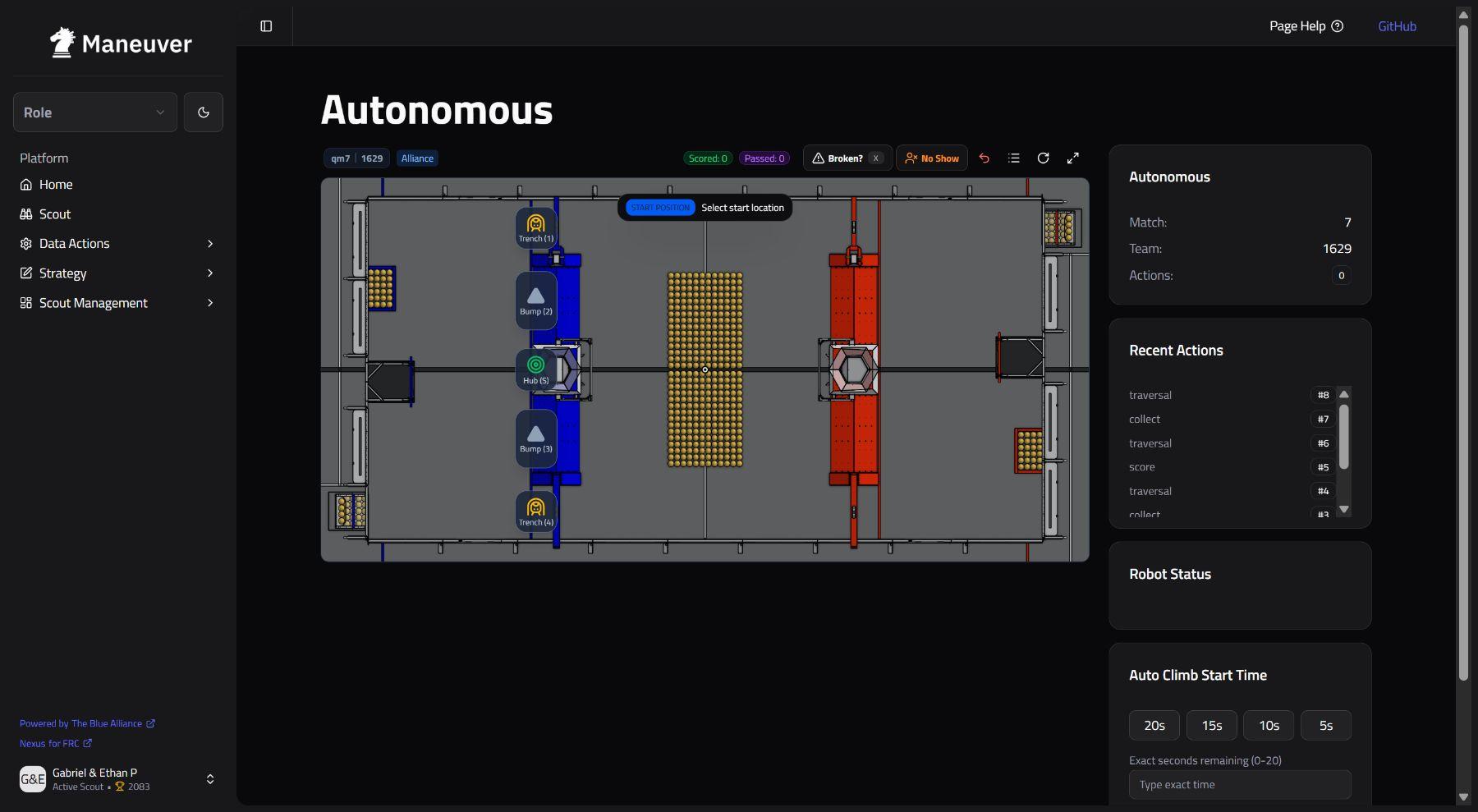
Match scouting
Capture what a robot actually does, quickly and consistently.
- 02
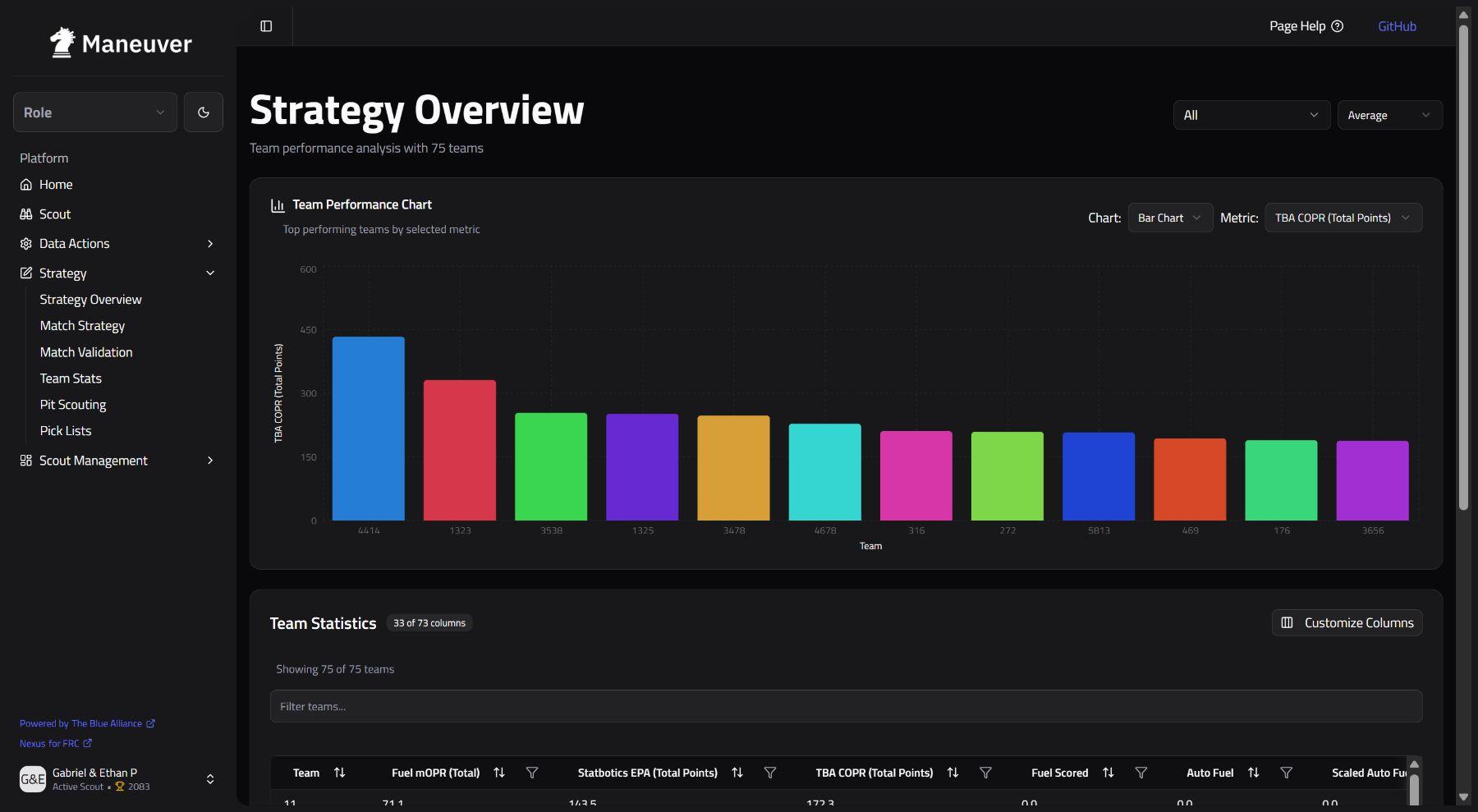
Analytics
Turn many observations into comparable performance patterns.
- 03
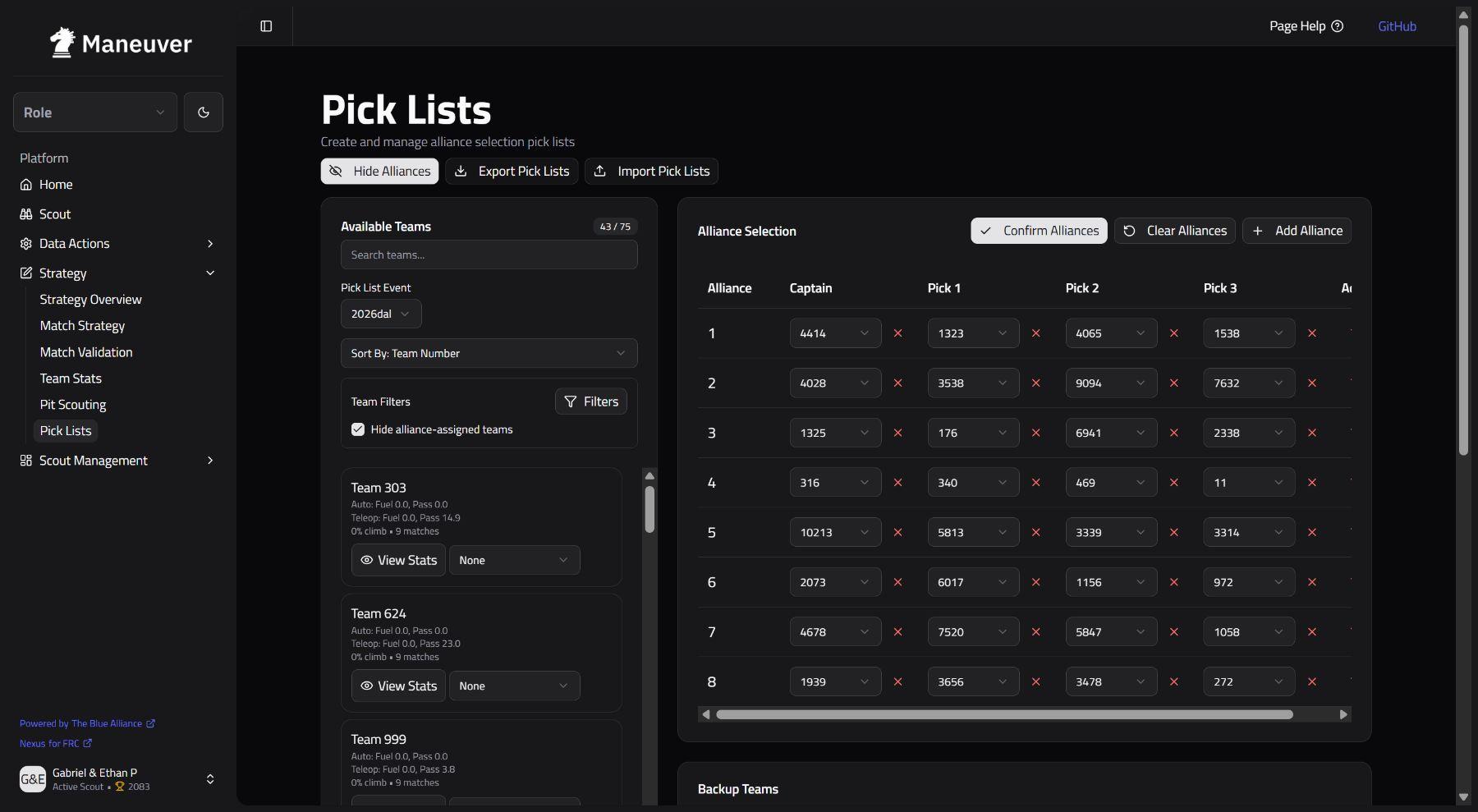
Pick lists
Help teams weigh capability, reliability, and strategic fit.
- 04
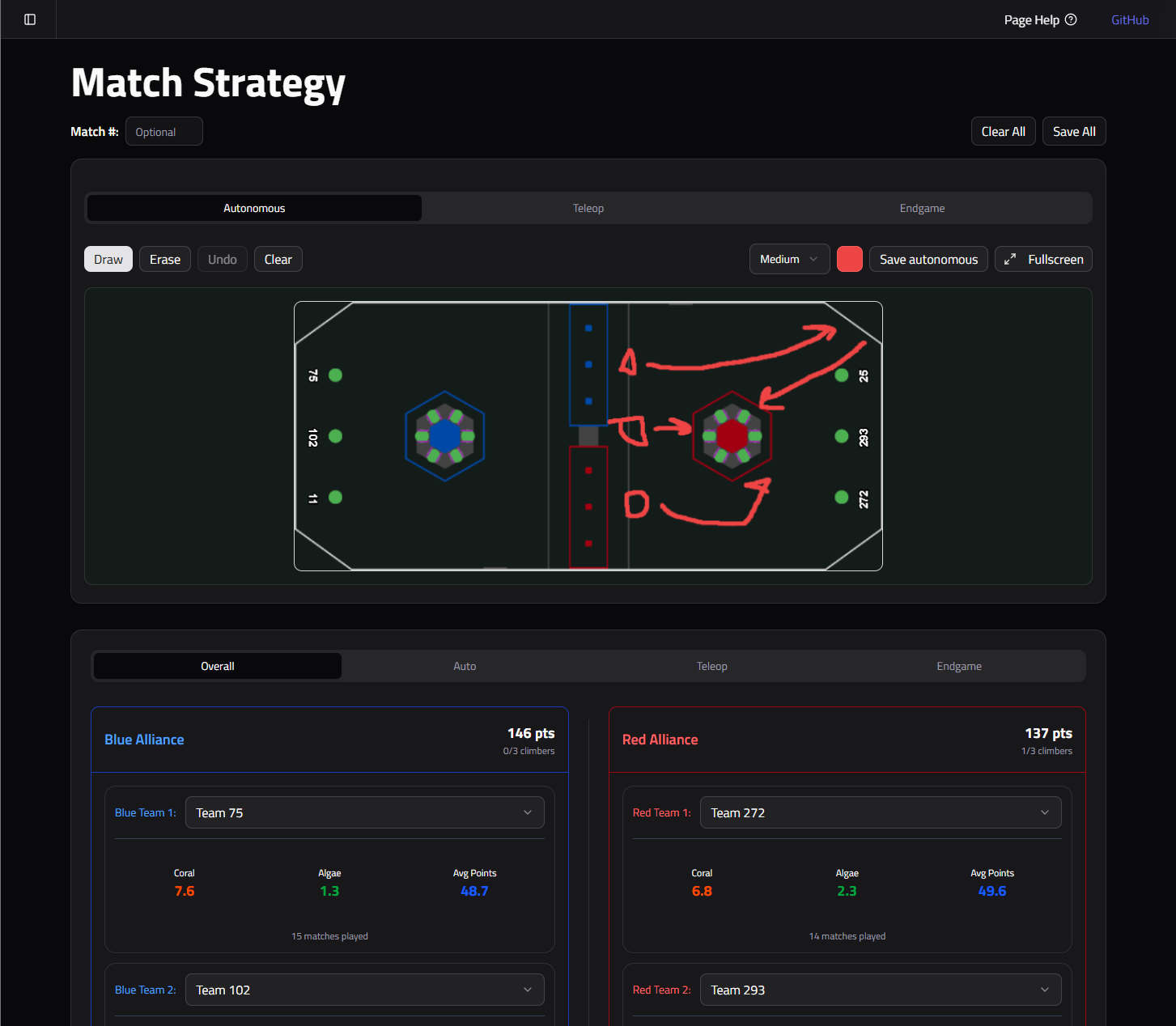
Match strategy
Bring alliance data into a shared plan teams can use on the field.
Designing with real users
Maneuver reached 8,000+ users across 15 countries, ranging from teams building their first scouting program to teams competing at the FIRST World Championship.
Operating the product
Once thousands of people were relying on Maneuver during competitions, the way I approached development changed. Bugs could affect teams competing that weekend. New features had to be balanced against stability. User reports exposed workflows, devices, and edge cases I hadn’t anticipated.
Operating Maneuver taught me to treat design as an ongoing conversation with users rather than something completed before implementation.